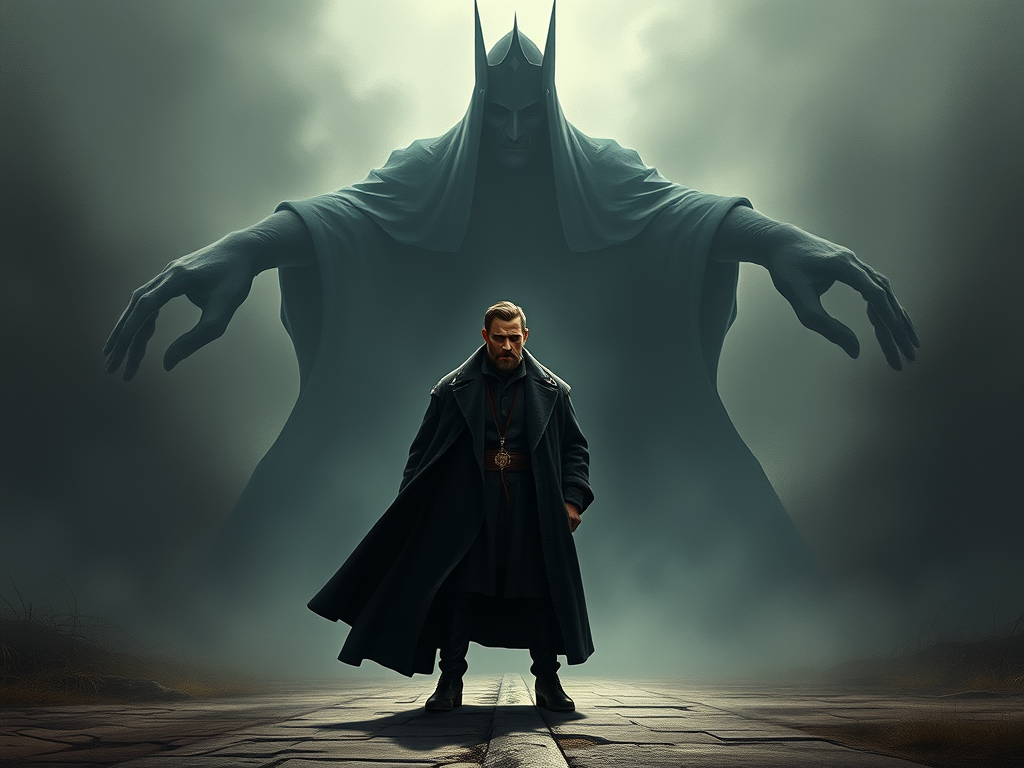
Notes Toward a Review of The Brothers Karamazov
Dostoevsky’s The Brothers Karamazov can be approached as a family drama, a murder novel, a psychological study, or a theological meditation. Yet beneath all these layers lies something even more enduring: a philosophical investigation into freedom, suffering, and moral responsibility.
Two chapters “Rebellion” and “The Grand Inquisitor” form the intellectual axis of the novel. Read together, they reveal not only Ivan Karamazov’s internal conflict, but Dostoevsky’s confrontation with one of the central problems of modern thought: whether human beings can bear the burden of freedom.
—————————————————————
Ivan’s “Rebellion”: An Ethical Protest
Contrary to a common simplification, Ivan’s position is not merely atheistic. His argument is subtler and more unsettling. Ivan does not confidently deny God; instead, he refuses to accept a world in which innocent suffering — especially the suffering of children — becomes morally justifiable.
The core of his protest is ethical rather than metaphysical:
– Even if divine harmony exists
– Even if suffering is ultimately “explained”
– Ivan refuses reconciliation at the price of innocent pain
His famous gesture of “returning the ticket” expresses not disbelief, but moral refusal. The scandal for Ivan is not God’s existence, but the moral intelligibility of creation.
—————————————————————
The Grand Inquisitor: The Three Temptations Reinterpreted
In response, Ivan presents his poetic parable: “The Grand
Inquisitor.” Here Dostoevsky transforms the biblical temptations of
Christ into a theory of civilization and power.
1. Bread — Material Security
“Turn stones into bread” becomes the temptation to solve the human condition through material provision.
Christ refuses to enslave humanity through guaranteed comfort.
The Inquisitor insists people will trade freedom for security.
—————————————————————
2. Miracle — Spectacle and Certainty
“Throw yourself down” becomes the temptation to compel belief through miracle.
Christ refuses faith built on coercion.
The Inquisitor argues humans cannot endure uncertainty.
—————————————————————
3. Kingdoms — Authority and Order
“Take the kingdoms of the world” becomes the temptation of political power.
Christ refuses earthly domination.
The Inquisitor claims authority is necessary for happiness.
—————————————————————
Freedom vs Happiness
The Inquisitor’s accusation is devastating:
> Christ burdened humanity with freedom beyond its strength.
Freedom produces anxiety, responsibility, inner conflict.
The Inquisitor’s project is to relieve humanity of this weight:
– Feed them
– Reassure them
– Govern them
In exchange, people surrender freedom for stability.
—————————————————————
The Kantian Background
Kant argued that morality requires freedom and autonomy. Human dignity rests on the capacity for self-legislation — the moral law within.
Yet Kant also observed a tension:
– Virtue does not guarantee happiness
– The moral life risks appearing absurd
To preserve the rational coherence of morality, Kant proposed the
postulates of practical reason:
– God
– Immortality
Not as proofs, but as conditions that make the “highest good”
conceivable.
—————————————————————
Dostoevsky’s Radicalization
Dostoevsky dramatizes and destabilizes this Kantian structure.
Ivan embodies Kantian moral seriousness pushed to the breaking point:
– Moral consciousness rejects the world
– Reason generates rebellion
– Freedom becomes unbearable
The Grand Inquisitor embodies the anti‑Kantian temptation:
– Remove freedom
– Preserve happiness
– Eliminate moral risk
—————————————————————
Why It Still Matters
Together, these chapters anticipate a recurring modern dilemma:
– Security vs freedom
– Comfort vs responsibility
– Certainty vs doubt
Dostoevsky shows that both rebellion and tyranny can arise from the same source: the human struggle with suffering and freedom.
—————————————————————
Closing Reflection
The Brothers Karamazov ultimately refuses easy resolution. It does not settle the conflict between faith and doubt, nor between freedom and happiness. Instead, it leaves readers with an enduring question:
**Can humanity accept freedom — with all its anguish — or will it forever seek refuge in bread, miracle, and authority?**
For those who want to read the original text in a distraction-free format, I’ve made the full public domain version available on TextStack.
Leave a Reply